Sunday, January 24, 2016

Lod Through the Eyes of Outsiders

One of the most beneficial aspects of work is seeing the impact it has on others. Sometimes, I feel it is easy to go through my work just thinking of what I need to do day-to-day, and not thinking about the admirable results I am producing for the communities I'm working with. Especially in my current situation, since I am leaving Lod in five months and may never return, it has been easy to consider my time here as a temporary project that has a short-term impact that will not hold meaning after I depart. What I have learned, however, is that this is the farthest thing from the truth.

Over the past week, I had the privilege of my parents coming to Israel to visit me. Even though we have Skyped almost every week and kept in touch through email and WhatsApp, their physical absence from my life made me miss them a great deal, and it was so nice to actually be with them physically. We were able to do many things together during their eight-day stay, including trips to some of Israel's most interesting cities like Jerusalem, Akko, Tel Aviv, and one of my new favorites Zichron Ya'akov. However, what gave me the most meaning was not the places we went to, but the time they spent with me in Lod witnessing the community I have called home for the past four months. Through their time in Lod, they were able to witness my projects and their purposes with open minds, and give outsiders' perspectives on the work I am doing.

It is one thing for my supervisors, coworkers, Yahel staff members, and fellow Yahel volunteers to compliment the work I am doing. They are doing the same work, and they all are motivated to do it because they believe in the positive impact it is producing. They are right to think so, but they are thinking with an insider's perspective that is completely subjective. When people enter a context from the outside, they have had little exposure to the matter at hand and are able to provide a trustworthy opinion without much bias. With this in mind, after my parents saw some of my projects and commended me for the positive impact I am creating, I believed them. I knew that by coming to Lod with different perspectives from those of us who have living and working here, my parents could give me honest and impartial opinions of what they saw in the city and which initiatives seemed effective. Though my parents' company in general made me overjoyed, the time they spent observing my work in Lod was the greatest gift of all.

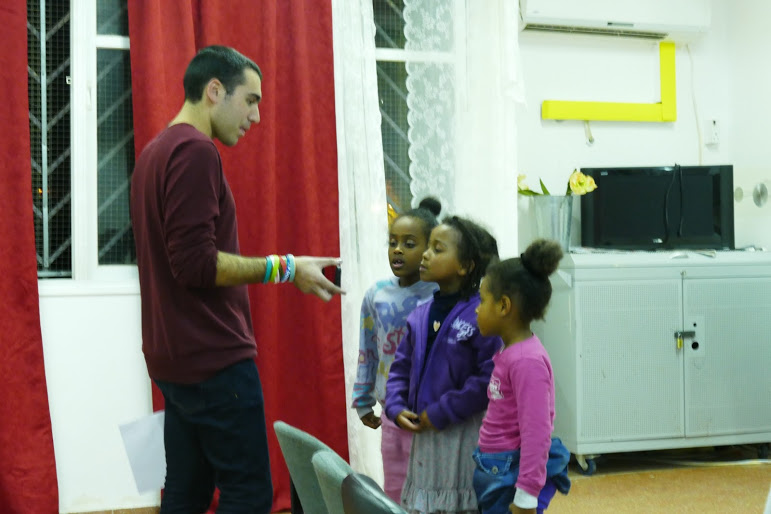
My parents' fresh look on my work also allowed them to explain how my impact can be improved. This was especially relevant when they visited a music chug (activity) that I lead once a week with Ethiopian children at the Chicago Community Center. Over the course of this chug, I have struggled to decide what exactly my role should be. From my experience as a choral singer, I have learned music from a very technical perspective. Therefore, my gut instinct when giving singing lessons is to teach breathing techniques, how to sing musical scales, and how to match notes from a piano. I have also considered my role as an American, thinking that makes me responsible for incorporating some English into these lessons in addition to Hebrew. With both these things in mind, choosing appropriate songs to teach my kids has been challenging. There are some Hebrew songs I know that are catchy and fun like "Od Yavo Shalom Aleinu" and "Yachad", and my kids have really enjoyed those. However, I have felt that in order to further improve my kids' knowledge and my ability as a teacher, I need to take risks and try teaching songs that are a bit above my kids' comfort level.

During the lesson my parents attended, I learned that these risks do not always work out. I wanted to help my kids learn more English by choosing a song that had both English and Hebrew, hoping the Hebrew would make it easier for them to follow. What I did not consider, however, was my kids' reading level in Hebrew. When I put the lyrics in front of them and started playing the song, it became clear that the song was too difficult for them to read and follow along to. Frustrated over their inability to perform, one of my girls stormed out of the room and the others hid in the corners and became completely unresponsive. I intended to continue pushing for my kids to learn this song until I realized the main issue: the lyrics sheet didn't have vowels, and these kids are still at the level of needing vowels in order to read. Realizing this mistake in judgment, I decided to drop the song and enticed my kids back into the lesson by playing "Let it Go" on my phone, which they love to sing and dance to. This was a very close call, and it made me learn to be very careful about comfort levels when working with little kids.

When talking to my parents after the music lesson, I expressed how I felt like a failure as a teacher for not being able to accomplish my goal of teaching that song and creating a very distressing scene for my students. Thankfully, they were able to talk some sense into me by saying that taking risks is important for personal growth and instead of being a failure, this situation was a teaching tool for how to continue with this chug for the next five months. They also showed me that the purpose of this chug is not necessarily to teach these kids how to sing, but to provide a fun and creative space in which they can express their love of music. They said from observing my lesson, they saw how much fun my kids had just being able to perform the simple songs I taught them, and I should just focus on more songs like that instead of pushing my kids' levels and trying harder songs. Because they came with outsiders' perspectives, my parents were able to provide valuable advice as to how to make this lesson more beneficial, and for that I am truly grateful.

The Chicago Community Center, where my music lessons are held


My parents' visit to my Yahel community also positively impacted them by showing them a different side of Israel that exemplifies sanity in a sea of disarray. When communicating with my parents throughout my time on Yahel, they have expressed constant concern about the wave of violence between Israelis and Palestinians and certain actions the Israeli government has taken that they have seen as detrimental toward peace. Particularly with the recent announcement of a bill that would force nonprofits to announce their sources of foreign funding, it is easy to see why Jews and others around the world are concerned about Israel's inclusiveness of different opinions and overall democratic character. However, when Israel's democracy is seemingly under threat, it is important to see the evidence on the ground that proves otherwise, and that is exactly what my parents witnessed through Yahel. We had the pleasure of meeting with Yahel's Executive Director Dana Talmi, an inspiring woman who devotes her life to recruiting partners in strengthening social change initiatives in Israel. Dana was very honest with us, and said that while she is scared of the direction Israel is going in, she sees many pockets of hope through the communities and leaders she works with. Dana also expressed that as long as there are loud voices on the ground and in the government fighting for change and justice, Israel's democratic character remains intact. After this meeting, my parents and I discussed this message and they were comforted with the knowledge that the people of Israel are not simply accepting the status quo, and they are fighting to a create a truly democratic society.

With Dana in her home in Zichron Ya'akov
Another highlight of my parents' visit was when they observed two of my lessons at Elrazi, the Arab primary school where I teach English three days a week. As I expected from the warm reception I have received since I started teaching there, everyone at school was so thrilled to have my parents there. The teachers invited them in with open arms, and the kids were enthusiastic to talk to them and learn more about America. The first lesson they saw was a music lesson with a section of the school's fourth grade led by the Canadian music teacher Jen. They definitely added to the excitement of this lesson by singing along with the kids and taking pictures of the class. They also gave the kids more confidence to speak English by giving them an excuse to use words like "mother," "father," and "brother."

My favorite part of this visit was when my parents got to see me teach one of my fifth grade classes. This is one of my favorite classes because the kids are cute, sweet, smart, and polite (the perfect set!). When my parents met these kids, they were very impressed by the amount of English they knew and how much they were able to communicate. Before I even took out the five kids I teach in my small group, my student Hiba, who is considered one of the smartest in the school, told my parents, "Because of Dan I love to speak English." This was very surprising for me to hear because I usually go through the motions of the day and I never truly realize the impact my work has. Nevertheless, I was very touched to hear this, and in that moment I could actually feel the positive influence I have on my kids. Through this instance and many others, my parents' outsider presence made me step back and see what my work is like from the outside looking in. In these moments, I could visualize that any time I engage my kids through lessons and activities, I am earning their respect and empowering them to challenge themselves in advancing their knowledge of my foreign language and culture.

Me with my small group of fifth graders


Me in front of Elrazi

Me with Elrazi's English teacher Adel (far left) and the fifth grade homeroom teacher (center)

My parents' visit brought me so much excitement and joy. Not only was I able to spend time with them after months without their presence, but I was also able to grow in my work through their outsider perspectives. Now that I am almost half-way through my program, it was great to reflect on the work I'm doing and ways to improve for the time I have remaining. I miss my parents now, but the examples and encouragement they provided remained in Lod past their departure, and will continue to do so well after my time here is finished. As Malala Yousafzai said, "One child, one teacher, one book, and one pen can change the world."

With my mom at a wine tasting in Zichron Ya'akov 


Kotel selfie with dad
The folks :)


Monday, January 4, 2016

Life is Precious...but so is Living

As I have mentioned many times, living in Israel means living in a complex and unpredictable reality. Sometimes this has a positive connotation, meeting eccentric people and having unique experiences that can only be visible in a place where so many cultures and narratives collide. Other times, however, the connotation is one of shock, sorrow, and fear. This, unfortunately, has been the case since last Friday afternoon, when a shooter attacked innocent civilians and killed two at a bar on Dizengoff Street in Tel Aviv.

For those who know Tel Aviv, you know that Dizengoff Street is one of the most lively and exciting areas of the city. It has some of the best shopping, restaurants, and bars in the city, and it is one of the best places to see the trendy nightlife and youthful spirit that gives Tel Aviv its infallible reputation worldwide. I know this area very well, and I have gone there many times during my time on Yahel to explore and have a fun time with friends. I was most recently there Wednesday night, when I took visiting family friends to an excellent seafood restaurant near the corner of Dizengoff and Gordon Street. Little did I know that two days later, right next to where I sat and enjoyed a nice meal would be the site of tremendous terror and despair.

I could not help but think that I could have been a victim of this shooting if I chose to go out on Friday instead of Wednesday, or if the shooter decided to proceed with the attack on Wednesday instead of Friday.  At the same time, I had many friends who were staying in Tel Aviv for New Year's Eve, and were only a couple of blocks away from the shooting. What would have happened if they decided to enjoy a drink on Dizengoff as part of their New Year's celebration and happened to cross paths with this killer? It turns out they were all perfectly safe, but we had no way of knowing until they texted us saying they were out of harm's way. In a small country like Israel, when something this severe happens, it is likely you know someone who was affected, and it is essential to know that everyone close to these incidents is secure.

It is a feeling like no other to know that a place you feel the most comfortable and care-free in one day can turn into the most insecure and deadly place the next day. My heart is filled with sorrow for the victims of this tragedy. I also feel much fear, knowing that a place I spend a lot of time in can easily become a center of terror. However, my dominant emotions right now are anger and frustration. I am angry at how unfair it is, that the people of Israel cannot perform the most leisurely activities without the threat of being murdered by a lunatic. I am frustrated that during the course of the current wave of terrorism in Israel, I have not been able to go anywhere in the country without fearing a possible terror attack, which makes me much more reluctant to be independent and go to places I would normally go to without question. No one should feel afraid to go through their daily routines and do the things they are passionate about. For this reason, I strongly empathize with all Israelis going through this turmoil, and I am strongly committed to working toward a viable solution that allows Israelis and Palestinians to coexist peacefully and maintain normal and relaxed lives.

This was not the first time in my life I have felt insecure due to terrorism. This incident brought to mind many shootings in the US in public spaces such as houses of worship and movie theatres, which have greatly increased my anxiety and vulnerability when going to such places. I have, of course, also been largely affected by the numerous stabbing and shooting attacks that have occurred in Israel throughout my time here. However, this shooting resonated with me much more significantly than similar attacks have before. With the attack occurring in the exact location I was at just two days before, I couldn't help but insert myself into that context, and even think of myself as a victim. In my mind, that killer was after me and all others who would have been at that bar enjoying drinks and the company of friends. In my mind, I could have easily been killed that day, and if this violent trend continues, any next day I spend at a bar or restaurant could be my last.

Though at any other time I would be undoubtedly willing to spend a night in Tel Aviv, knowing the shooter had not yet been caught understandably made me very concerned for my safety. Therefore, when I was invited to go out for dinner Saturday night in Tel Aviv with some family friends, I had no idea what to do. On one hand, I was excited to try a new restaurant and get a taste of home, especially with one close family friend who I had not seen in a while. On the other hand, with suspicions that the killer was still in the area and the realization that I would need to travel alone to reach my location, I was so scared of the possibility of something happening, and I knew that being alone would make me much more vulnerable.  As with other instances when I have planned to travel to places in Israel soon after attacks were committed in those locations, this was not an easy decision to make. Very confused and emotional, I eagerly sought the advice of my parents, who had negative predictions of the safety conditions in the city but told me I needed to look at what others in the area were doing and decide for myself what the best course of action would be.

Ultimately, after hearing that my family friends would be able to transport me to and from Lod, I decided it would be best for me to proceed with my plans in Tel Aviv. I understood the security threat I was under with a killer still on the loose, and I recognized the importance of protecting my life over less important priorities such as a random night out. However, I also felt an obligation to prove to myself and others that this is the same Tel Aviv that existed before the attack, and at its essence it is not a place that should be associated with disaster and terror. I am always profoundly moved by the resilience of Israelis following terror attacks, and this has taught me something very important: If Israelis gave into fear every time Israel was attacked, no Israelis would ever leave their homes, and the fun, dynamic public sphere Israel has created would be nonexistent. In short, life is precious and worth preserving, but it is also worth actively living, especially in the aftermath of terrorism.

I have attempted to follow this message many times throughout my time in Israel, even in tough situations when others were more reluctant. One such situation was on Christmas, a day when there are many celebrations among Israel's Arab Christian population. As one who has grown up in a society that glorifies Christmas and has never missed a Christmas celebration, I thought it be meaningful to observe the holiday this year in a place with significant sites pertaining to the life of Jesus. However, when talking to friends and family about where to go, most of them thought it was risky and unpredictable to go to a largely Arab area at this time. So, just like with my Tel Aviv dilemma, I knew that I would need to trust my instincts and make a rational decision on my own. Knowing that there had been incidents in Bethlehem and Jerusalem soon before, I decided that Nazareth would be the safest option for me. Even though no one was going to go with me, which I knew would make more vulnerable, I decided that it would be worthwhile to go on a short afternoon trip to Nazareth to see the major sights and observe the holiday.

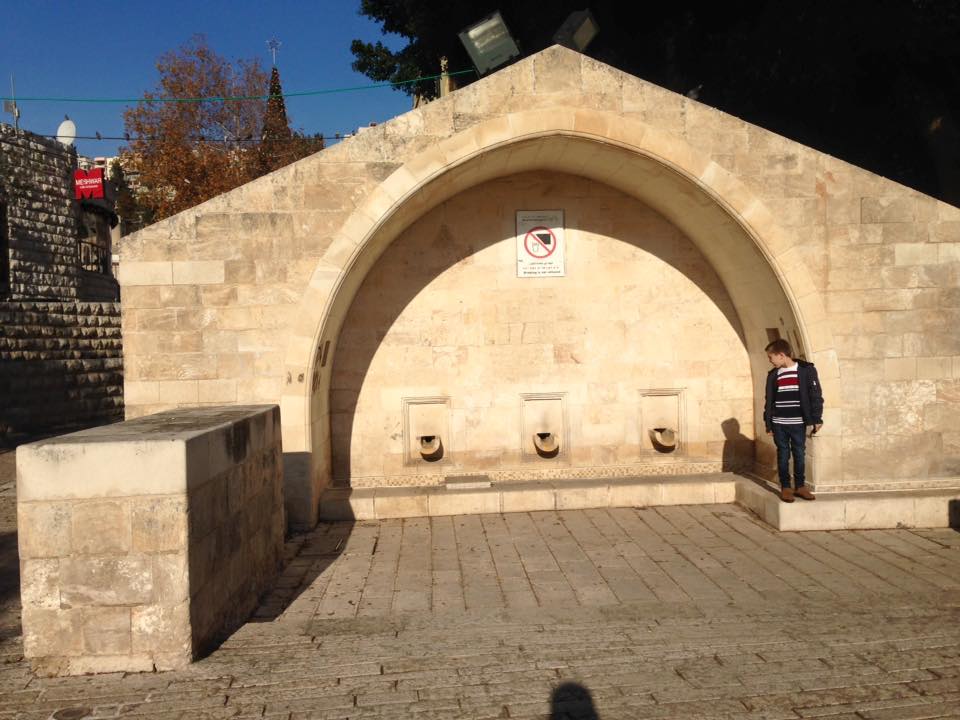
Even after all the uncertainty I had about traveling to an Arab city in the midst of such an unpredictable time, I realized from the moment I entered Nazareth that I was about to have a very meaningful experience. I have always been into learning about different religions, and since the semester I spent in Jerusalem I have become very committed to exploring important religious sites. I knew that Nazareth, a place where Jesus lived for much of his life, would be the perfect place to connect to Christianity's early history and continue my exploration of Israel's overall religious significance. My journey started soon after my arrival when a bus dropped me off right next to the Basilica of the Annunciation, a massive complex under which Catholics believe the angel Gabriel appeared to Mary and said she would give birth to the son of God. While walking around the city and learning about the main sites, including numerous churches from the time of Jesus, I learned that there is also a Greek Orthodox church that connects itself to the Annunciation, and that story conveys that the angel Gabriel confronted Mary at a well instead of a cave. I, of course, needed to walk the extra half hour to see this church, which was very small but was connected to a large plaza with a big Christmas tree decorated beautifully for the holiday. I found this debate to be very interesting because it shows the extent of diversity within Christian theology and how different Christian sects choose to depict their sites and the stories connected to them.

Additionally, I was very surprised to see that though it was one of the most important days for Christians in one of their most important cities, not many people were actually there. While walking around Nazareth's beautiful churches and discovering their stories, I only saw a handful of tourists witnessing these sites alongside me. My assumption is that similar to my concerned family and friends, many people thought it was too risky to go to Nazareth, even with the extra meaning that comes with being there on Christmas. Though I think everyone is entitled to their concerns, I have to say from being in Nazareth in that moment, this feeling of worry seemed like the farthest thing from the truth. Even when I was walking alone through Nazareth's large outdoor market and crowded streets, I felt just as safe as I would walking in any other part of Israel. Though I got nervous whenever I was spoken to in Arabic and was unable to respond, I was mostly able to communicate in English or Hebrew and I was comforted seeing both languages on the street signs and on shops and restaurants along the roads. I understand why people feel insecure when traveling to such areas at this time, but I think it's important for people to think rationally and realize that not all Arab areas are dangerous, and taking a leap of faith and going to one can provide you with a very meaningful and beneficial experience. In this regard, I learned that a big part of actively living life is taking chances that in the long run could allow for significant benefits, in terms of experience and perspective.

The Catholic Basilica of the Annunciation

Remains of the ancient village of Nazareth


The cave where Catholics believe the angel Gabriel appeared to Mary


Greek Orthodox Church of the Annunciation


A wishing well in the Church of the Annunciation

The well where the Greek Orthodox believe the Annunciation occurred

Mary's Well Square


The Synagogue Church, a former synagogue where Jesus presumably preached
Christ Church, an Anglican church in the city center

In the midst of the unpredictable and concerning nature of the current wave of terrorism, I believe my work with Yahel is more relevant than ever. In order to restore calm and security to the people of Israel, we need to come to a permanent end to the Israeli-Palestinian conflict and establish a lasting peace between Jews and Arabs. One way to do this is by creating ties between Jewish and Arab communities through working toward common goals and discussions about the topics that connect them. This is exactly what I have started doing every week with Juzur, an organization that seeks to strengthen Lod's Arab population and provide them with increased opportunities in areas such as education and employment. Every Sunday night, my group has started to join together with a group of bright, bubbly, charismatic, funny, and goal-oriented Arab university students to discuss our common interests and projects we can collaborate on to improve conditions in Lod. From our interactions, I have found these young Arabs to be some of the most interesting and relatable people I have met throughout my time on Yahel. Not only do we share many common interests such as movies, foods, and television shows, but we also share common goals of equal opportunity and lasting stability within our communities. If more people were to have experiences like what I have with these Arabs, they would know that peace is not only possible but it can also be durable if we take the time to truly understand the bonds that we share.

A group shot of us during our first meeting with Juzur

The situation in Israel can often seem dire, especially when contemplating recent events like the shooting in Tel Aviv. However, it is important to know that life goes on in spite of terror, and no attack can prevent committed Jews and Arabs from reaching the durable peace both sides deserve. Living in Israel has taught me to value life, but through living it to the fullest by stepping out of my comfort zone and accepting new experiences I can benefit from tremendously. Life is precious...but so is living.


Sunday, December 27, 2015

Privilege and Perception

There is a well-known saying that goes along the lines of, "you don't know what you got till it's gone." I wholeheartedly agree with this saying, but I would expand its meaning so it also conveys, "you don't know what you got till it's staring you in the face."

I confronted both of these notions during my Chanukah holiday, which I decided to spend in Germany visiting friends I made when I studied in Australia. As soon as I entered Germany, I noticed several drastic changes from the environment I have become accustomed to in Israel. One of the most significant details I realized was the abundance of Christmas decorations situated literally everywhere I went.  The most common example of this was the large Christmas markets, which appeared at least once in every city I visited. These markets were crowded with both Germans and foreigners who were looking to buy toys, ornaments, and other gifts for Christmas and enjoy traditional German food and drink such as sausage, schnitzel, and my favorite, the traditional Christmas wine called gluhwein. As someone who has always enjoyed the Christmas spirit through the heartwarming songs, movies, and decorations and appreciated Christmas as a significant part of American culture, I got very emotional being in a place that so closely resembled what Stamford and DC look like at this time of year. While I love Israel and living here has been such an amazing experience, seeing the ubiquitous Christmas spirit of Germany made me realize that the predominantly Jewish environment in Israel is so different from the environment I grew up in, and that moving to Israel permanently would mean giving up on components of my American background and culture that I hold dear.

Decorations at a Frankfurt Christmas market


A Christmas tree in Berlin, with ornaments showing the different landmarks

My friends Kathrin, Sebastian, and Johannes drinking gluhwein

On the other side, noticing the dramatic shifts between Israel and Germany also made me appreciate the benefits that living in Israel offers, particularly the prevalence of Jewish expression. While in Germany, I was both enlightened and surprised by how different the German Jewish communities are from the ones I am used to. In Israel, I am accustomed to seeing multiple synagogues on one street and I just need to walk next door to attend prayer services and perform other Jewish rituals. In Germany, not only are there not as many synagogues as there are in Israel, but the ones that are there are extremely protected with security measures that produce barriers to entry, even for a proud Jew like myself. For the two synagogues I visited during my trip, one made me go through an exact replica of an airport security check, and the other made me hand over an ID after calling on an intercom requesting to be let into the locked building. I understand the precautions German Jews need to take due to the country's history with anti-Semitism, but out of all places, I never thought the most impenetrable place in a community could be a synagogue. True, things went much more smoothly after I got past the barriers, and I was so moved at the opportunity to light Chanukah candles and attend a Shabbat service with other Jews while traveling in a foreign land. However, the dramatic security presence and exclusivity apparent at these synagogues really left a mark on me, and made me appreciate places where I can comfortably practice my religion and connect with my fellow Jews.

A meaningful moment during my time in Berlin. Seeing the Chanukah menorah and the Christmas tree together at Brandenburg Gate.

Another meaningful Jewish moment from Berlin. Walking through the Holocaust Memorial.

These two experiences brought me significantly out of my comfort zone, and helped me to better appreciate what it means to be both an American and a Jew. I learned that though it often seems advantageous to be seen as an American or a Jew, especially when discussing relevant issues in today's global society, there are also contexts in which maintaining an American or Jewish identity brings more challenges than benefits. For each comfortable experience I have had as an American in the US or a Jew in Israel, I have been in other contexts such as Germany where neither identity is predominantly expressed, which has made me struggle with insecurity about success in these environments. Though I am most certainly proud to be American and Jewish and I appreciate the privileges these identities offer, I have become aware that privilege is based on your perception and those of the people around you, and just because you are considered privileged in one context does not mean you are privileged in every context.

I started to think a lot about privilege and perception after a session I participated in last week on the topic, which was creatively organized by my fellow Yahelnikim Brittany and Rachel. During this session, the entire group needed to sit in three rows and collect one piece of paper each. We were then instructed to crumple up our paper and try to throw it into the garbage can, which was situated in front of the first row. Naturally, the people in the row closest to the can had the best chance of achieving this goal. Conversely, the people in the back row had a much tougher challenge, despite having a seasoned athlete there.

This session brought to mind that people's opportunities for success are determined by the level they sit at in relation to others, which corresponds to their privileges in society. However, the most significant idea I gathered from this session is that one's privilege can easily change based on the context he or she is in, and one who we generally see as privileged is not always as privileged as we think. Like the athlete in the back row who couldn't make the shot, just because we have been privileged in the past does not mean that every situation will come easy for us, as contexts can always change in any direction.

I'm happy that this idea got brought to my attention, and I think this is an important point for people to remember. I am usually reluctant to discuss the concept of privilege because I think it can be a divisive and polarizing term. I have been in many conversations with my peers about privilege that have turned very heated because one group feels they are more victimized than the other and so the other group's contributions can be easily pushed aside and ultimately silenced.  I have felt this way many times as a white, heterosexual male. I, of course, realize that this part of my identity allows me certain privileges that other groups do not have, and I sympathize strongly with groups who need to suffer because of discriminations based on identities they were born into. However, I also strongly feel that my identity as a white male should not erase my place in these discussions, and it certainly does not mean that I do not have significant struggles and challenges.

Living in Lod has exposed me to many instances of struggles with privilege, in both obvious and more obscure senses. I, for example, have struggled a lot with language barriers and not being fully comfortable in a new culture. Even after three months of living here, I cannot get past my tendency to be polite and always get confused in situation when I need to be direct and confident. This is made even more challenging when I can't understand what someone is saying in Hebrew or Arabic, and when I have a hard time finding the words to say in response. Even though I feel equipped to do everything I need to do in my daily life and lucky to have the tools and experience to do so, I still feel jealous of all Israelis, regardless of their background, who are more comfortable with the language and culture and are able to fit in much more easily.

I was surprised to see something similar with the Russian community in Lod. Though many of them know Hebrew and are very active within the Lod community, many Russians here struggle greatly with maintaining their language and culture while adapting to Israeli society. Lia, the manager of the community garden I volunteer at, is one such person. This week at work, Lia shared that since in Israel the Russian language is basically confined to the Russian population, she and other Russians in her community need to work very hard to ensure their community members grow up aware of the Russian language and culture. I appreciated hearing about this challenge because it is not one that I have been exposed to in the past. This example showed me that each population in Israel, especially immigrant populations, has its own stories of struggle, and all of these stories are significant when discussing the notion of privilege.

I have also appreciated exposure to populations in Lod that do not receive benefits that I take for granted. For example, working in an Arab school in a poverty-driven neighborhood has shown me how privileged I have been to receive a quality education and live in an environment that suited my education needs. This week was the first week of Elrazi's winter break, and Jodie and I have been assigned certain days to go to school with our 5th graders and help prepare them for the Meitzav exam, a standardized test all 5th graders in Israel will take in March. We were instructed to give our students practice Meitzav exams, and I asked the English teacher Adel if we could tell our students to review certain topics at home. To my surprise, Adel instructed me to never give my students homework assignments, because with their unstable and unsupportive home environments they will never be able to complete them. This was a big eye-opener for me as someone who has never needed to worry about not being able to do my homework because of my situation at home. I gained a lot of insight from this, and it is definitely something I will keep in mind when interacting with my kids going forward.

My encounters with the Ethiopian population of Lod have also shown me how privileged I am to come from a stable home environment. This past week, I began conducting a weekly music lesson at the local matnas (community center), and my first two students were two little Ethiopian girls aged 6.5 and 7. I started the lesson asking the girls to introduce themselves and describe how singing plays into their lives. I asked one girl if any of her family members sing, like her father and mother, and she responded by saying that her mother sometimes sings, but her father "doesn't live in Lod" and she "never sees him." This response could have meant a number of things, but knowing the prevalence of youth at risk in Lod brought a very negative picture to mind. This got me thinking that my work makes it so I am constantly in touch with individuals who are completely alien to the benefits I have become accustomed to, and this is a great opportunity for me to make a real impact in their lives. Through this weekly music lesson specifically, I am aiming to use singing as a way to bring joy and hope into the lives of my kids, and to teach them that even if the world pushes you down there is always a way to be brought back up.


Through my time in Israel, I have learned about multiple facets dealing with the word privilege. I have learned to appreciate the privileges I have, and show sympathy toward those who do not share these benefits. On the other hand, I have also realized the importance of recognizing challenges that all groups are facing, no matter how privileged we perceive them to be. Relating to myself, I understand the need to think about the struggles experienced by the underprivileged communities of Lod and around the world. However, this does not mean that the challenges I face should be disregarded, and hence I should also feel entitled and confident about sharing my own struggles. Privilege is a word that gets thrown around a lot, and deservedly so. But instead of using it as a way to discriminate against other groups, we should be using it to recognize each other's struggles and come up with solutions that work in everyone's favor. By recognizing that privilege can be perceived differently in different contexts, I believe we can become more understanding and productive in any situation we are placed in.

Happy holidays to all, and to all a Happy New Year! :)